October 13, 2026 by Anas Mustafa
Home security is becoming more connected. Instead of relying on individual devices that work independently, smart sensors can detect activity around your home, share that information with other connected devices, send useful alerts, and support automated responses.
This technology is becoming more common in Canadian households. According to CIRA’s 2026 Canadian Internet Trends survey, 24% of respondents reported having a home security system or surveillance camera in their household, up from 15% in 2019. For homeowners considering smart home security, the practical question is how those devices can work together to provide useful information and greater control.
Smart sensors add several functions to a home security system, including motion and entry detection, customized alerts, and automated actions. Each sensor serves a specific purpose, while the system settings determine which events require your attention.
Motion sensors identify activity in designated parts of the home without requiring you to watch those spaces continuously. A motion alert confirms that movement occurred, but it doesn’t show who or what caused it. Timing, location, and the system’s armed status help you decide whether the activity is routine or deserves attention.
For example, movement in a basement while you’re away may deserve attention, while activity in a home office during the day may be expected. CSP’s home automation system uses motion and inactivity data alongside household schedules and security settings. Reviewing those details together helps you understand when and where activity occurred without treating every movement as a possible threat.
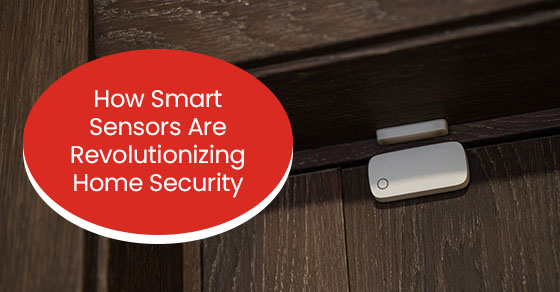
Door and window sensors identify when a connected entry point opens or closes. Unlike a motion alert, this information shows which door or window was involved and whether the activity began at a specific access point.
An open front door may simply mean someone has arrived home. Activity at another exterior entrance may deserve more attention, especially when the security system is armed or the event occurs at an unusual time. The sensor status gives the alert a specific location and helps you interpret the activity in context.
Connected sensors can send timely notifications when selected events occur. CSP supports customizable text, image, and video alerts for certain events. For example, you can receive an alert when a monitored door opens, an unlock notification from a compatible smart lock, or a video notification from a supported camera when it detects a person in a selected area. Settings can be customized by device, time of day, and day of the week, helping you prioritize relevant alerts without being notified about every routine event.
Home automation can use sensor activity to carry out routine actions without requiring each step to be performed manually. CSP’s home automation system supports customizable triggers between security functions, locks, lighting, and thermostats. For example, arming the security system when leaving can be configured to lock the front door and turn off connected lights at the same time.
Automation settings can be adjusted to suit your household’s routines rather than relying on one standard configuration for every home.
Motion activity or inactivity, door and window status, activity from other security sensors, and whether the system is armed or disarmed each provide a different piece of context. This is what we mean by multi-sensor learning: using several inputs to provide a clearer picture of activity throughout the home. This coordination doesn’t eliminate every security risk, but it can make the system more responsive and manageable.
Several smart devices do not automatically form one coordinated system. When devices operate separately, homeowners may need to switch between controls, maintain different settings, and manage each product on its own. An integrated system brings compatible equipment into one place, allowing sensor information, alerts, controls, and automated routines to work together instead of functioning as separate features.
Our home automation service places connected security controls in a single app and supports customizable triggers between compatible devices. Homeowners can manage security functions, locks, lighting, thermostats, and other supported equipment from one place, then set routines that reflect how the household operates. This makes integration a question of coordinated control, not simply the number of devices installed.
Connected devices can collect, use, and exchange information, so privacy and cybersecurity deserve consideration alongside convenience. More than one in four Canadians surveyed in 2022 said they did not trust smart-home devices with their personal information.
Innovation, Science and Economic Development Canada’s guidance for connected-device consumers recommends asking what data a device collects, how that information is used or shared, what product support is available, and whether devices receive security updates. It also recommends using strong, unique passwords and properly securing your home network. When comparing systems, ask about account protection, updates, privacy practices, and how connected products handle your information.
Choosing smart sensors starts with identifying the activity you want to monitor, the alerts you want to receive, and the actions you want compatible devices to perform automatically. Your property, routines, and preferred level of control will help determine the right setup.
Canadian Security Professionals offers professionally installed home security and home automation options that can integrate compatible security and smart-home functions through one connected system.
To discuss your options, call Canadian Security Professionals at 1-877-494-9911, email info@cspalarms.ca, or request a home security consultation.
Depending on the equipment installed, sensors can detect events such as motion or the opening and closing of connected doors and windows. The specific detection capabilities depend on the sensors and security system configured for your home.
Yes. A compatible sensor may start an automated routine when it detects a configured event. CSP’s home automation system coordinates supported security settings, locks, lighting, and thermostats through customizable triggers. The available integrations depend on the devices and system configuration in your home.
Yes. CSP provides remote text, image, and video alerts for certain events. Notification settings may be based on the device, time of day, or day of the week, allowing you to choose which activity should generate an alert while you’re away.
The security of a connected device depends on the device, network, account protection, software updates, and how the system is configured. Government of Canada guidance recommends using strong, unique passwords, keeping devices updated, reviewing data practices, understanding how connected products collect and share personal information, and enabling multi-factor authentication when a device or account supports it. No connected system can provide an absolute guarantee of cybersecurity or privacy.

 Hours of Operation:
Monday to Thursday: 8:00 AM to 9:00 PM
Friday: 8:00 AM to 7:00 PM
Saturday: 11:00 AM to 4:00 PM (EST)
Press option 1 for 24/7 Alarm Monitoring or assistance with an active alarm.




Fill out the form and a CSP security specialist will contact you about our current offers.
Call now to learn more
about our current offers.

Call Now
1-877-494-9911
Security Specialists Available: Monday to Thursday: 8:00 AM to 9:00 PM | Friday: 8:00 AM to 7:00 PM | Saturday: 11:00 AM to 4:00 PM (EST)